Buying new blinds with children: what to ask the shop
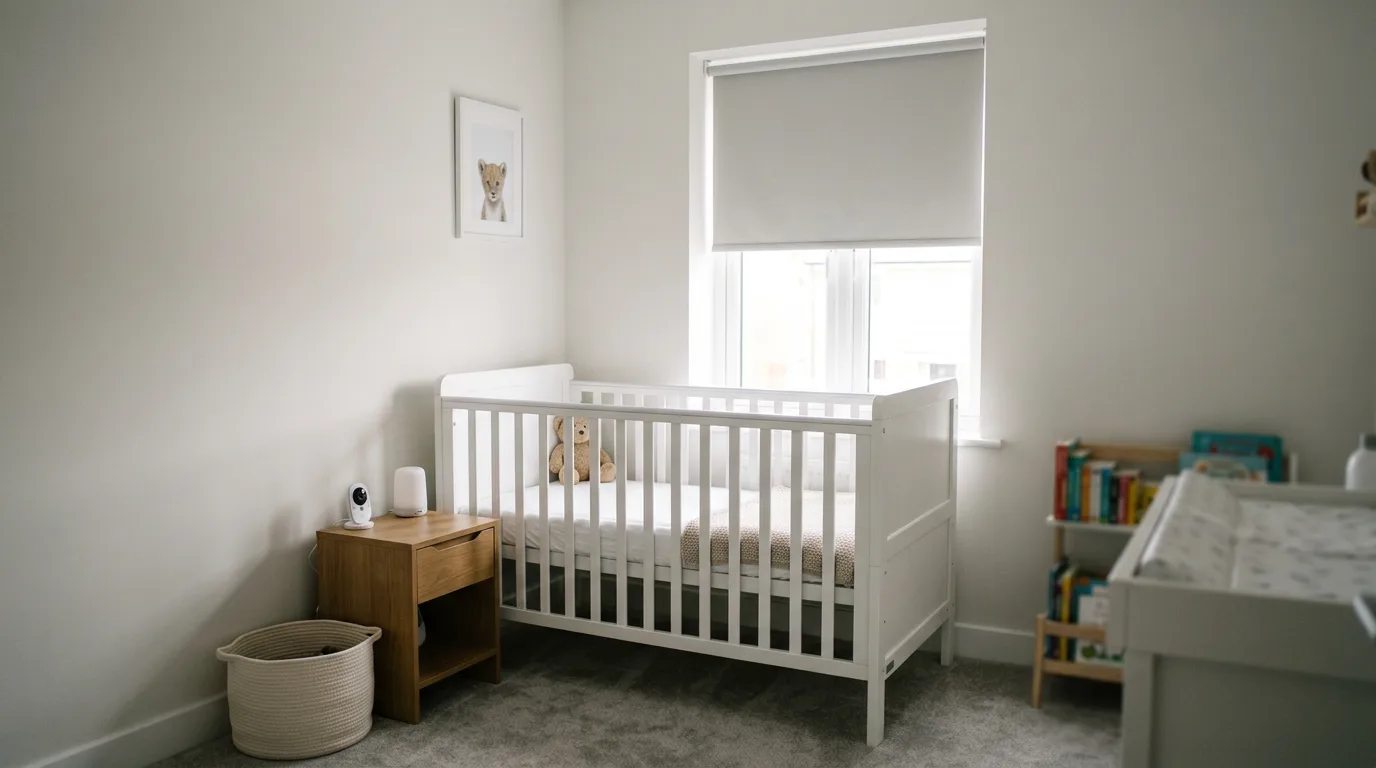
Most advice about blind cords is about the blinds you already have. If you are about to buy new ones for a nursery, a child's bedroom or a rental, you have a rare chance to avoid the problem rather than manage it. These are the questions worth asking before you pay.
Is the standard compulsory?
No. BS EN 13120 covers internal blinds operated by cords or chains, and its 2014 amendment added child-safety requirements. It is a voluntary standard in the UK, so a blind being sold is not automatically built to it. RoSPA's child safety policy statement makes the same point: many homes are still fitted with blinds that do not meet it. Ask directly whether the blind is made to BS EN 13120 and look for it on the packaging or the quote.
What the standard asks for
- Safe by design or with a safety device fitted at manufacture wherever a loop of cord or chain exists or could form — not left for you to add later.
- A cord-to-wall safety device supplied with the blind, such as a tensioner or a cleat, and instructions for fitting it.
- A maximum length for the operating cord or chain.
A supplied device only helps if someone fits it, so ask the installer to do it before they leave, and check it is screwed into something solid.
Is a cordless blind the answer?
For the operating cord, largely yes: a spring-loaded, wand-operated or motorised blind has no loop to reach. Be careful with the word “motorised”, though. The guidance summarised in the EU decision on blind safety, 2011/477/EU, notes that motorisation removes the risk from the operating cords but not from the inner cords that run through the blind. Roman blinds are the usual example, which we cover in Roman blinds and inner cords. Ask which cords remain once the blind is hung.
Why the bedroom matters most
The same EU decision records that most accidental deaths linked to blind cords happen in bedrooms, and that the children involved are aged between 16 and 36 months. That is the age at which a child starts climbing onto furniture, so it is worth also reading cots, beds and furniture near windows when you plan where the new blind and the bed go.
If you still want a chain blind
Sometimes a chain blind is the right choice: blackout performance, a large window, or a landlord who has already specified one. In that case ask for a shorter drop of chain than the standard length, a breakaway or tensioned arrangement, and wall fixings supplied. Where a chain still hangs loose after that, keeping it wound out of reach is the remaining step; our comparison of a winder, cutting the chain and a breakaway connector sets out the tradeoffs of each.
A short list to take with you
- Is it made to BS EN 13120, and where does it say so?
- Is a safety device fitted at the factory, or just included in the box?
- Who is fitting the wall device, and will they do it before they leave?
- Which cords or chains are still reachable once it is installed?
- Is there a cordless version of the same fabric?
Already have corded blinds you are keeping? See the FAQ for how the winder works, or see the winder