A ten-minute room-by-room check of every blind cord in your home
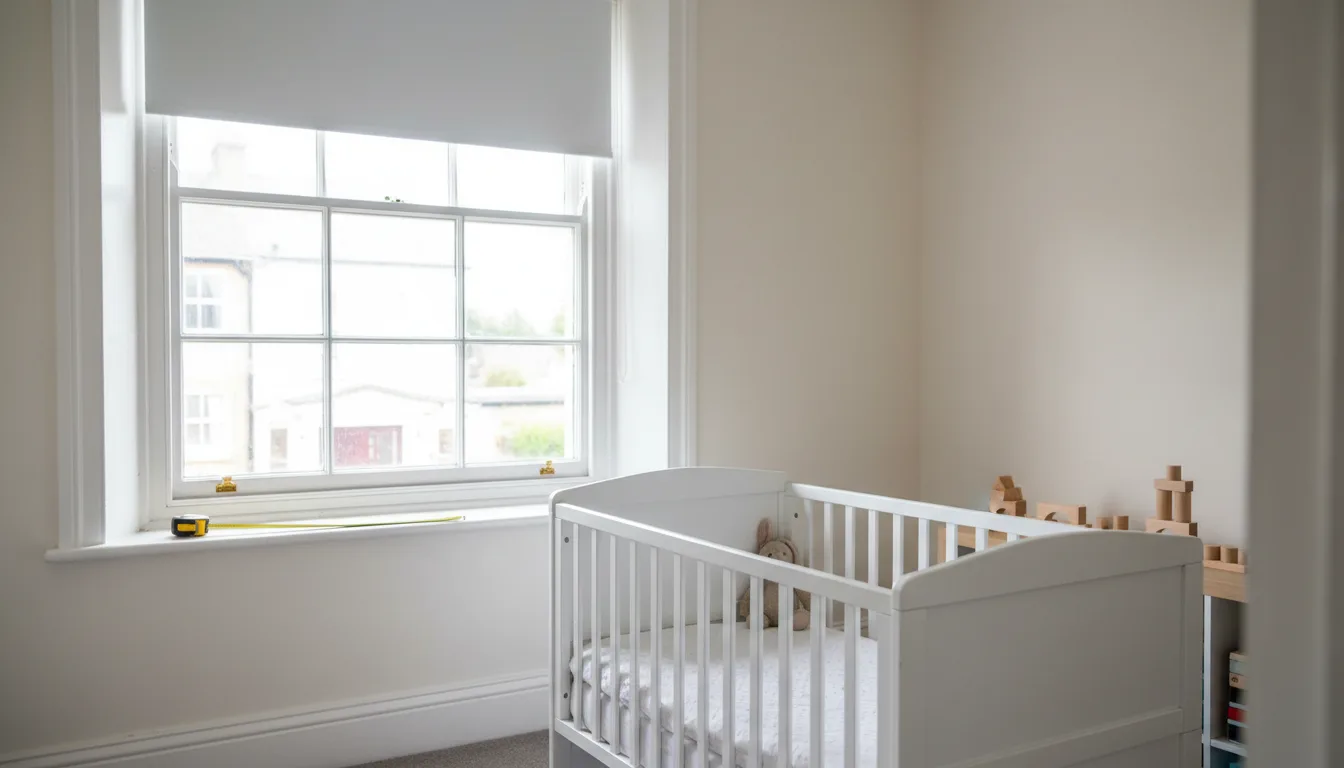
Most advice about blind cords is aimed at the moment of buying. This is for the blinds you already have: walk round with a tape measure and go through each room once. It takes about ten minutes, and it tells you which windows need action.
Start with the bedrooms
UK legislation on blind cord safety cites research finding that most accidental deaths involving blind cords happen in bedrooms, and that the children affected are mostly aged between 16 and 36 months (see the EU decision on window blinds, as published on legislation.gov.uk). So check the nursery and any child's bedroom first, then any room where a toddler naps.
What to check at each window
- Is there a loop? A continuous chain, or a cord that forms a loop when the blind is lowered, is the hazard. Pull-cords with a free end are a different, smaller problem.
- Is it fixed to the wall or frame? Many blinds have a cleat or tensioner that holds the loop taut or out of reach. Check that it is actually screwed in, and that nobody has unhooked the chain to make the blind easier to use.
- Where does the chain hang? Hold the tape at the lowest point of any loose chain and measure from the floor. Then measure from the top of whatever is under the window: a cot, a bed, a sofa arm or a windowsill a child could climb onto.
- Are there inner cords? Roman and some other blinds have cords on the back that you never touch. See Roman blinds and inner cords.
- Is there a label or a safety device? Blinds made to the current standard should carry safety information. A missing label does not make a blind unsafe, but it often means an older blind with no device at all.
Why age matters
The standard for internal blinds with cords or chains, BS EN 13120, was revised in 2014, and compliance with it is voluntary. A blind made to it is expected to be safe by design or supplied with a safety device. Blinds fitted before that are not covered, which is why a check of the blinds already in the house is worth doing even if you have never had a problem. The retrofit devices that exist for older blinds are meant to meet BS EN 16434. Both are described in more detail in Are corded blinds illegal in the UK?
What to do about what you find
- Move the furniture first. It costs nothing. A cot, bed or sofa pushed against a window gives a child a way up to the chain. See Cots, beds and furniture near windows.
- Fit or fix a cleat or tensioner where the blind already has a loop, and check it after any cleaning or repair.
- Take up the slack with a winder. A stick-on chain winder wraps the spare chain out of reach without drilling, which suits rented homes. Fit guidance is in Where to fit a blind chain winder.
- Replace the blind if it is old, damaged, or has cords no device can cover. A cordless or motorised blind removes the hazard completely.
Write it down. Note each window, what you found and what you did. If you rent, send it to your landlord or agent; if you let, it is a useful record.
Repeat the check whenever you move house, rearrange a child's room, or when a child starts climbing. The answer for a window can change without the blind changing at all.